Introduction
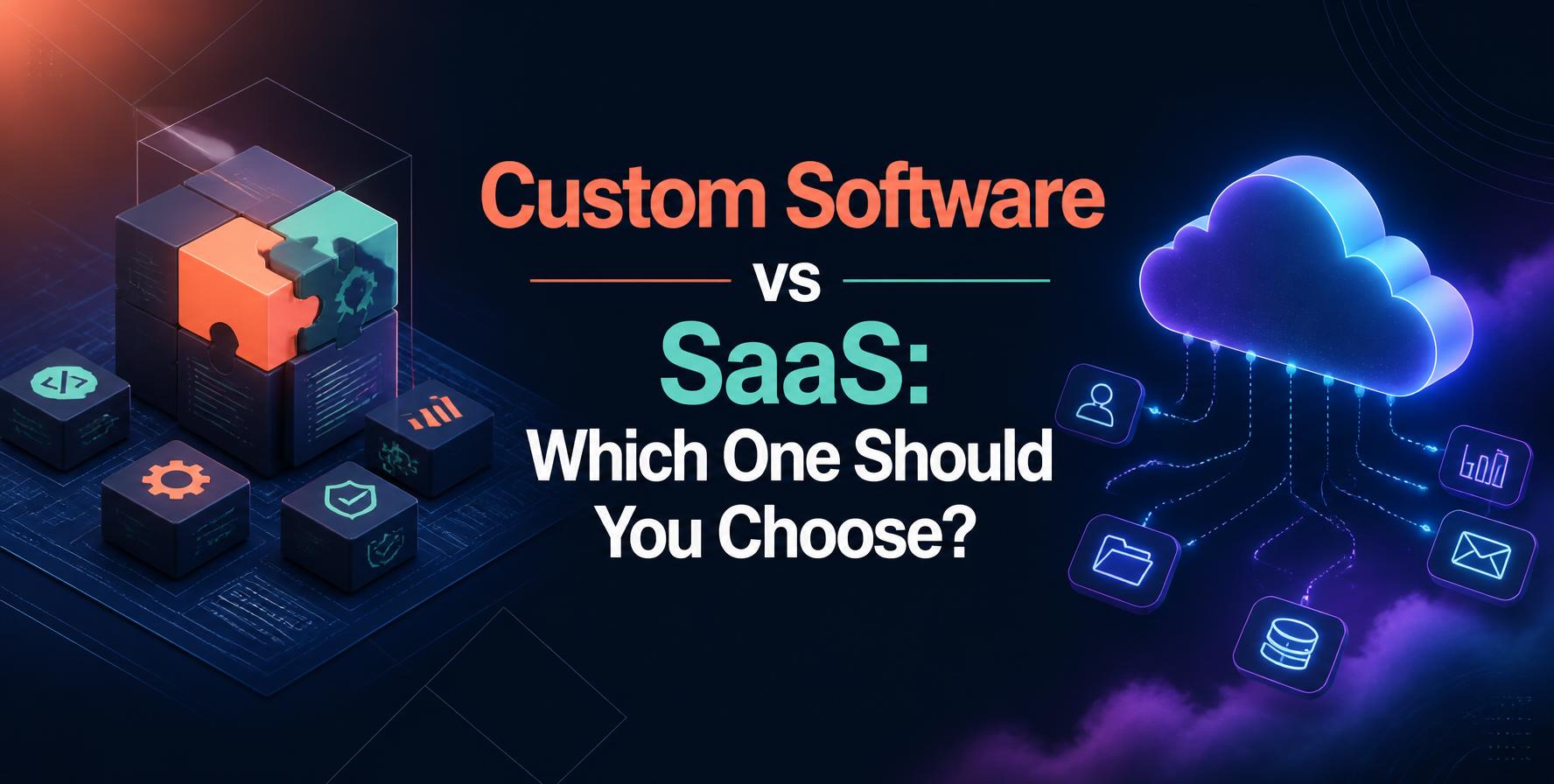
Choosing the right software can greatly affect how well your business runs. But there’s an important question that businesses often ask: should they go for custom software or SaaS?
Both options have their own strengths.
However, they’re suited to different kinds of business needs.
Custom software gives you full control and the ability to tailor it to your specific needs.
On the other hand, SaaS is convenient and easier to set up quickly.
So, the best choice depends on your goals, budget, and how your business operates.
This guide explains the difference between custom software and SaaS in a simple way.
It will help you make a better decision for your business.
Quick Answer Summary
Whether to choose custom software or SaaS depends mostly on your business’s needs.
Choose custom software if you need unique features and full control.
It’s best for businesses with specific processes.
Choose SaaS if you need a solution that’s already ready to use.
It usually costs less upfront.
In short, SaaS offers convenience and speed, while custom software offers flexibility and long-term control.
Before making a decision, think about your budget, your workflows, how scalable you need the solution to be, and your future plans.
Detailed Explanation
What Is Custom Software?
Custom software is made specifically for your business.
Developers create features based on your workflow and goals.
For example, a company might need a custom HRMS software for managing attendance, payroll, and employee data.
Unlike off-the-shelf solutions, custom software doesn’t force your business to change its existing processes.
Instead, the software fits around your way of working.
Custom software also allows more flexibility.
You can add, remove, or change features as needed. For example, businesses can integrate with CRM systems, payment gateways, or other tools.
However, custom software typically takes more time and money to develop initially.
Benefits of Custom Software
Custom software offers several important advantages.
Complete Customisation: The software fits exactly what your business needs.
Better Scalability: You can add new features as your business grows.
Greater Control: Your business controls the features, data, and development process.
Easy Integration: Custom software can work with your existing business systems.
Competitive Advantage: Unique features can help your business stand out.
Cloud Flexibility Without Losing Control: Custom software doesn’t have to mean giving up the convenience SaaS offers. With cloud-based custom solutions, your business gets the same accessibility and scalability as SaaS, while keeping full control over features and data.
For businesses that manage employees, you can also read our guide on 10 Features Every HRMS Software Should Include.
Limitations of Custom Software
Even though custom software has many benefits, it also has some drawbacks.
It takes longer to develop than SaaS solutions, and the initial investment is usually higher.
Also, businesses have to manage maintenance and updates themselves.
Therefore, choosing the right software development company is very important.
Learn more about how we approach Customised Solutions at Emaginationz Technologies.
What Is SaaS?
SaaS stands for Software as a Service.
It provides software through the internet using a subscription model.
Users typically pay monthly or yearly fees.
Popular examples include Google Workspace, Microsoft 365, and Salesforce.
Businesses can start using SaaS without having to build the software from scratch.
That’s why SaaS is good for businesses that need quick implementation.
Benefits of SaaS
SaaS has several advantages for growing businesses.
Lower Initial Cost: Businesses pay subscription fees instead of development costs.
Quick Setup: Most SaaS platforms are ready to use right away.
Automatic Updates: The service provider takes care of updates and improvements.
Easy Accessibility: Users can access the software from any device.
Maintenance Support: The SaaS provider handles technical support and maintenance.
As a result, businesses can focus more on their operations and growth.
Limitations of SaaS
However, SaaS also has some limitations.
Customisation options may be limited.
Businesses often have to adjust their workflows to fit the platform.
Also, subscription costs can go up over time.
Data control might be a concern for some organisations.
Furthermore, integrating SaaS with other specific systems can sometimes be difficult.
Custom Software vs SaaS: Key Differences
Understanding the differences can make your decision easier.
1. Customisation
Custom software offers complete flexibility.
Every feature can be tailored to your business needs.
SaaS platforms usually have standard features.
Customisation options may be limited.
Therefore, businesses with unique workflows might prefer custom software.
2. Initial Cost
SaaS typically has a lower upfront cost.
Businesses can start with a monthly subscription.
Custom software requires higher initial development costs.
However, custom software may offer better long-term value for larger businesses.
3. Implementation Time
SaaS solutions can often be implemented quickly.
Custom software requires planning, development, testing, and deployment.
Therefore, SaaS works better when businesses need immediate solutions.
4. Scalability
Both options can support business growth.
However, custom software gives businesses greater control over future changes.
You can add new modules whenever your requirements change.
SaaS scalability depends on the provider’s available plans and features.
5. Maintenance
SaaS providers manage updates, security, and maintenance.
With custom software, your development team manages maintenance.
Therefore, SaaS reduces technical responsibilities for businesses.
6. Data Control
Custom software usually provides greater control over business data.
SaaS stores data according to the provider’s infrastructure and policies.
Businesses should always review data security and privacy policies before choosing a solution.
Custom Software vs SaaS: Which Is Better for Your Business?
There is no single answer for every business.
Custom software works better when your business has specialised requirements.
SaaS works better when you need standard features quickly.
For example, a startup may prefer SaaS because of lower initial costs.
However, a growing organisation may eventually need customised software.
Therefore, focus on your long-term business goals.
If you’re worried about losing SaaS-style convenience, that’s no longer a real trade-off.
Many software development companies, including Emaginationz Technologies, now build cloud-based custom solutions, giving you the flexibility of custom-built features with the accessibility businesses usually associate with SaaS.
Ask yourself whether your current software can support future growth.
If your processes are unique, custom software may provide better value.
If your requirements are simple, SaaS may be the smarter choice.
Step-by-Step Process to Choose Between Custom Software and SaaS
Step 1: Identify Your Business Requirements
Start by understanding your current challenges.
List the tasks your software should handle.
For example, consider employee management, customer tracking, reporting, or automation.
Clear requirements will help you compare available options.
Step 2: Analyse Your Current Workflow
Look at how your team currently works.
Do employees follow a unique process?
If yes, SaaS may require unnecessary adjustments.
Custom software can support your existing workflow more effectively.
Step 3: Set Your Budget
Consider both short-term and long-term costs.
SaaS requires recurring subscription payments.
Custom software requires a larger initial investment.
Therefore, calculate the total cost over several years.
Step 4: Think About Future Growth
Your business needs might change as time goes on.
So, pick software that can grow with your business.
Think about adding more users, new departments, extra features, and ways to connect with other tools.
Scalability should still be a big factor when you’re making your choice.
Step 5: Check Security Needs
Every company deals with important information.
That’s why it’s important to look closely at the security features offered by the software.
Check things like data encryption, who can access information, how data is backed up, and the company’s security policies.
If your business handles sensitive data, you should focus on getting stronger control over that information.
Step 6: Look at Integration Needs
The software you choose should work with your current tools.
For example, you might need to connect it with accounting or marketing automation platforms.
Custom software gives you more flexibility when it comes to integration.
However, many SaaS platforms also offer useful integrations.
Step 7: Choose Based on Long-Term Value
Finally, don’t decide just based on cost.
Think about how productive the software will be, how well it can grow, how easy it is to maintain, and what your future needs might be.
The right software should support your business for years to come.
FAQs
1. What’s the main difference between Custom Software and SaaS?
Custom software is made specifically for your business.
SaaS is ready-made software you access through a subscription.
Custom software gives you more flexibility, while SaaS is faster to set up.
2. Is custom software more expensive than SaaS?
At first, custom software usually costs more.
But SaaS subscription fees can go up over time.
So, long-term costs depend on what your business needs.
3. Is SaaS good for small businesses?
Yes, SaaS works well for many small businesses.
It has lower initial costs and is easier to set up.
You can also upgrade your plan as your business grows.
4. When should a business choose custom software?
Choose custom software if you have unique work processes.
It also works well if you need special features or integrations.
Custom software is a good choice for businesses that plan to grow over time.
5. Can custom software connect with existing systems?
Yes, custom software can connect with your current systems.
Developers can build integrations based on your needs.
This flexibility is one of the biggest advantages of custom software.
6. Is SaaS secure enough for business use?
Many SaaS platforms have strong security features.
But businesses should check the security certifications and data policies.
Always choose a reliable provider that has good security practices.
Conclusion
Choosing between Custom Software and SaaS needs careful thinking.
SaaS offers quick setup, convenience, and lower initial costs, so it’s good for standard needs.
Custom software gives you more control, flexibility, and tailored features, making it better for special needs.
Before making a decision, look at your business needs and future plans.
Also think about your budget, integration needs, security, and scalability.
The best software should make your work easier, not create more problems.
Pick a solution that works well now and can grow with you in the future.
If your business has outgrown generic SaaS tools or needs workflows that off-the-shelf software simply can’t support, Emaginationz Technologies can help. We build custom software and cloud-based solutions tailored to how your business actually operates.