
Introduction
Picture stepping into a room where the walls change as you move. Images shift, animations react, and digital content becomes lively with every action. This is the kind of experience interactive wall projection can deliver.
Companies, schools, event spaces, and entertainment venues use this tech to make regular spaces more exciting. Rather than just showing information, organizations can let visitors engage with the content. This results in more thrilling and unforgettable experiences for the audience. But how does this technology function? And how can your business make use of it?
In this blog, we will examine its workings, uses, benefits, and how to bring it to life.
Quick Answer Summary
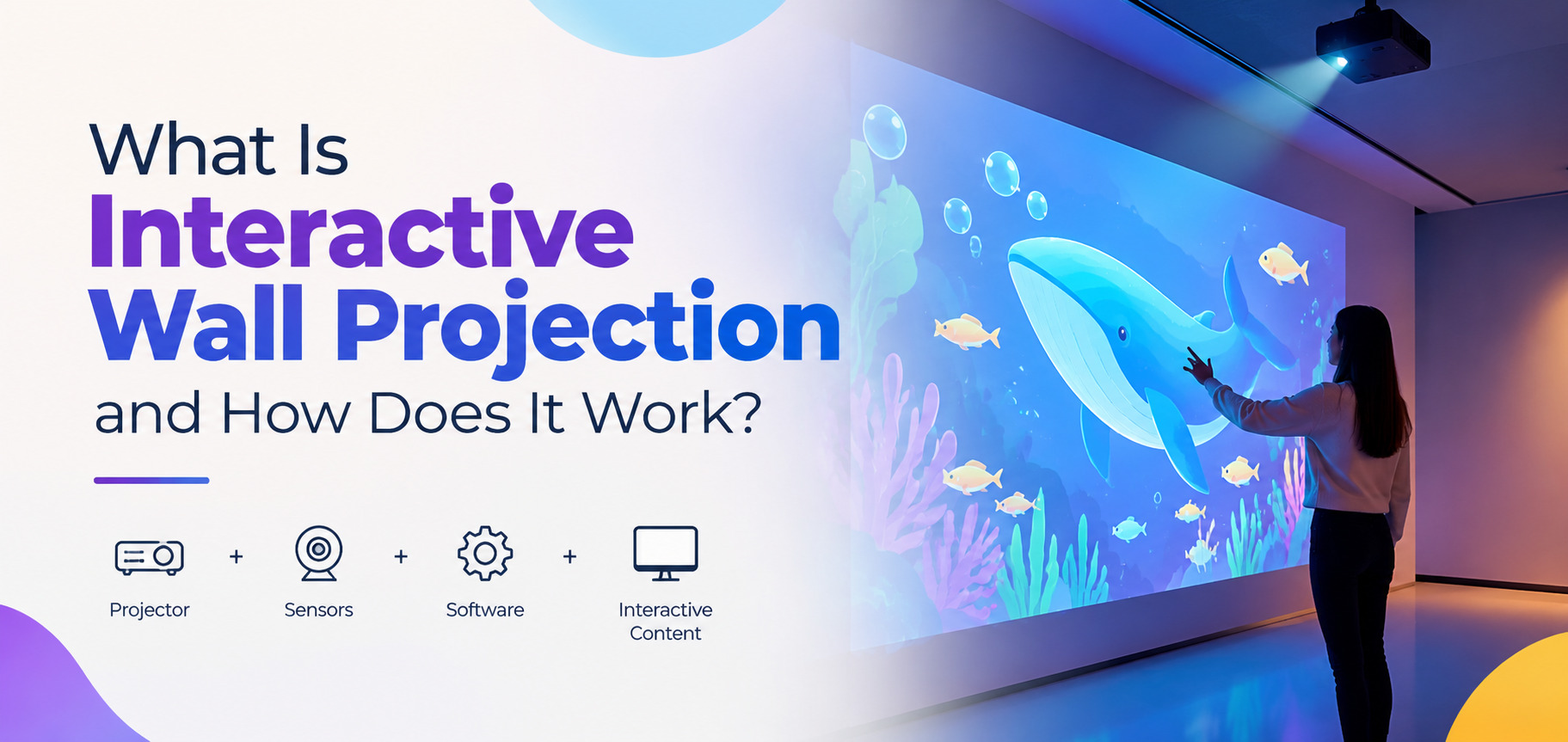
Interactive wall projection turns regular walls into digital areas that respond to movement, touch, or gestures. It uses projectors, sensors, special software, and interactive content.
Here’s how it works:
- A projector shows digital visuals on a wall.
- Sensors or cameras pick up movement, gestures, or touch.
- Interactive software interprets the input.
- The software changes the visuals based on the interaction.
- Visitors experience a dynamic and engaging digital space.
As a result, businesses can create interactive experiences that grab attention, involve people, and present information in a creative way.
Detailed Explanation
What Is Interactive Wall Projection?
Interactive wall projection is a technology that turns physical walls into responsive digital screens. Unlike standard display screens, it allows users to affect what is shown on the wall. For example, visitors might use their hands to control animations or explore projected data. Similarly, students can interact with educational diagrams, while shoppers can look at products through exciting visuals. Businesses can also use this tech to create branded experiences during tradeshows and company events.
How Does Interactive Wall Projection Work?
The technology combines several parts to give a responsive experience.
1. Projector
A digital projector shows images, videos, animations, or other visual content on a wall.
2. Sensors or Cameras
Sensors or cameras detect movement, gestures, or touch, depending on the system.
3. Interactive Software
Specialized software reads user input and decides how the projected content should change.
4. Interactive Content
Designers make animations, games, visual effects, or informational content that reacts to visitors.
5. Processing System
A computer or compatible device connects the parts and manages the interactive experience.
Together, these parts transform a plain wall into an engaging digital environment.
Key Benefits of Interactive Wall Projection
1. Creates Memorable Visitor Experiences
Interactive visuals make visitors take part instead of just watching.
As a result, businesses can create experiences audiences remember long after their visit.
2. Encourages Audience Engagement
Movement-based interactions can draw attention and get visitors to explore displayed content.
Moreover, interactive experiences can make people spend more time with your brand.
3. Improves Information Sharing
Businesses can show complex information using animations, visual examples, and interactive content.
This allows visitors to explore information at their own pace.
4. Supports Creative Brand Experiences
Custom visuals let businesses present their identity in unique ways.
For instance, brands can create interactive product demos, promotional displays, and themed environments.
5. Offers Flexible Applications
Organizations can change interactive content to suit different audiences, campaigns, and business goals.
Therefore, the same technology supports exhibitions, education, retail, entertainment, and office settings.
Where Can Businesses Use Interactive Wall Projection?
Interactive wall projection has various uses across different industries.
| Industry | Possible Application |
| Retail | Interactive product showcases and promotional experiences |
| Education | Engaging lessons, visual demonstrations, and learning activities |
| Exhibitions | Immersive displays and interactive brand presentations |
| Corporate Offices | Interactive presentations and visitor experiences |
| Museums | Educational storytelling and interactive exhibits |
| Entertainment | Interactive games and immersive environments |
| Hospitality | Digital welcome displays and engaging visitor information |
For example, a retail store could let customers explore product features through projected visuals.
Similarly, an educational institution might use interactive displays to make classroom activities more interesting.
Interactive Wall Projection vs Traditional Displays
Traditional display screens mainly show information for viewers to see.
In contrast, interactive projection allows visitors to influence the content being shown.
This gives different opportunities for businesses.
Traditional display screens can clearly and consistently communicate information.
However, interactive projection can encourage participation through movement, touch, and responsive visuals.
The best choice depends on your audience, space, budget, and communication goals.
Businesses looking to build custom digital systems can also check out our internal article, CustomSoftware vs SaaS: Which One Should You Choose?, to better understand the different software options available.
Step-by-Step Process: How to Implement Interactive Wall Projection
Setting up an interactive projection system needs thoughtful planning and the correct technology.
Follow these steps to create a compelling experience.
Step 1: Define Your Objectives
Start by figuring out what you want to achieve with the interactive projection.
For instance, your goal might be to attract more visitors, enhance learning, or display products effectively.
Step 2: Choose the Projection Area
Next, pick a suitable wall or surface for installation.
Think about the space available, lighting conditions, how far people will be from the projection, and how much movement the audience will have.
Step 3: Select the Right Technology
Pick the right projectors, sensors, cameras, and processing equipment.
Also, consider what kind of interaction your experience needs to have.
Step 4: Design Interactive Content
Create visuals that match your brand and meet what your audience expects.
Make sure the content is easy to use so people can interact without needing complex instructions.
Step 5: Integrate the Software
Connect the hardware with compatible interactive software.
This lets the system recognize user input and respond with the right visual effects.
Step 6: Test the Experience
Test the projection under real-world conditions.
Check how responsive it is, how clear the visuals are, how accurate the sensors are, and how the overall experience feels to users.
Step 7: Launch and Improve
Finally, introduce the experience to your audience.
Collect feedback and make updates to the content as needed to keep people engaged.
FAQs
1. What is interactive wall projection used for?
Interactive wall projection is used by businesses to create engaging digital experiences.
It is commonly used in exhibitions, retail displays, educational settings, museums, and corporate environments.
2. How does interactive wall projection detect movement?
Depending on the system, cameras or sensors are used to detect movement, gestures, or touch.
The interactive software takes this input and updates the visuals being projected in real-time.
3. Does interactive wall projection require special software?
Yes. Most interactive experiences require compatible software to process the input and manage the projected content.
The specific software needed depends on the hardware and type of interaction being used.
4. Can interactive wall projection be customised for businesses?
Yes. Businesses can customise the visuals, the way users interact, and the content to match their goals.
For example, a brand might create interactive product showcases or engaging exhibition experiences.
5. Is interactive wall projection suitable for exhibitions?
Yes. It can help exhibitors capture attention and involve visitors in the experience.
It also allows businesses to share information in a more engaging and interactive way.
6. What factors affect the cost of interactive wall projection?
The cost depends on the projector quality, sensors, software, installation needs, and the complexity of the content.
Therefore, it is important for businesses to understand their goals and technical needs before choosing a solution.
Conclusion
Interactive wall projection is a creative way for businesses to turn regular spaces into dynamic digital environments.
By using projection technology, sensors, software, and interactive content, organizations can boost participation and communication.
Custom experiences can also help businesses deliver their message in a more memorable and impactful way.
Whether you are setting up an exhibition, improving a retail space, or creating an interactive learning environment, this technology offers many exciting possibilities.
At Emaginationz Technologies, we offer custom interactive wall projection solutions tailored to your business needs.
Our team can guide you in finding the best approach for creating compelling digital experiences.
Ready to turn your space into an interactive experience?
Visit Emaginationz Technologies to explore our interactive projection solutions and see how we can help bring your ideas to life.
One thought on “What Is Interactive Wall Projection and How Does It Work?”