Introduction
Managing employees today involves much more than tracking attendance and processing salaries. As businesses grow, HR teams must handle recruitment, employee records, leave management, payroll, performance reviews, and compliance. However, managing these tasks manually consumes valuable time and often leads to errors. As a result, productivity decreases, and HR professionals have less time to focus on strategic initiatives. This is where HRMS Software Solutions in Navi Mumbai make a significant difference. By automating repetitive tasks, centralising employee information, improving communication, and providing real-time insights, HRMS software simplifies workforce management. Whether you run a startup, a small business, or a large enterprise, HRMS software helps streamline operations, improve efficiency, and support long-term business growth.
Quick Answer Summary
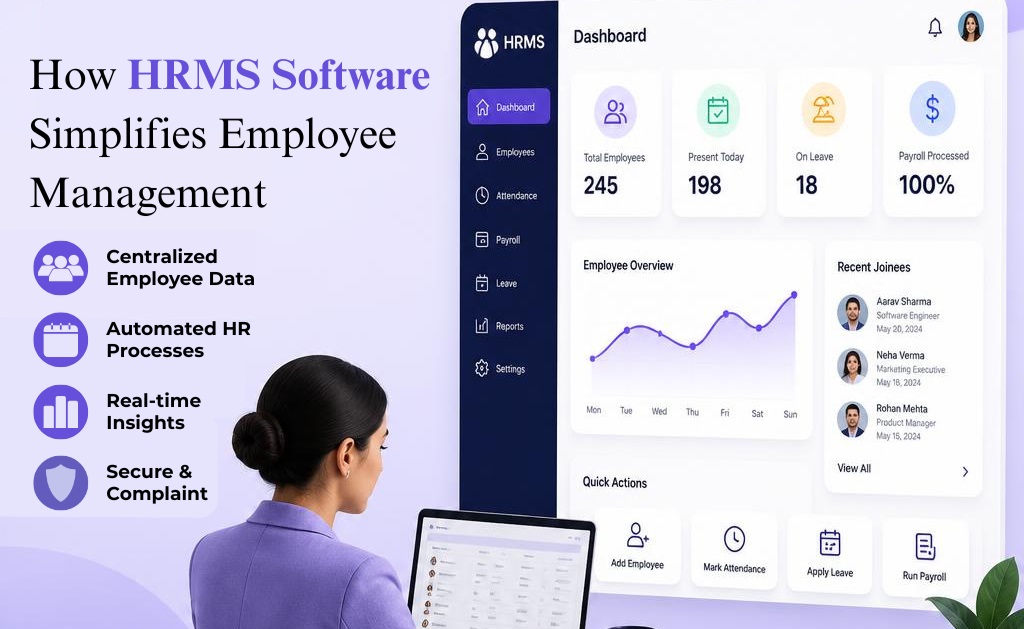
HRMS software helps manage employees more easily by automating key HR tasks like tracking attendance, paying salaries, managing leave, hiring new staff, getting new employees up to speed, assessing performance, and handling documents.
It cuts down on manual work, reduces mistakes, saves time, improves the employee experience, and provides useful insights through reports and analysis.As a result, businesses become more efficient, follow the rules better, and are better prepared for growth.
Detailed Explanation
What is HRMS Software?
A Human Resource Management System (HRMS) is a digital platform that centralises HR operations in one place. Instead of managing multiple spreadsheets or disconnected tools, HR teams can handle recruitment, attendance, payroll, leave management, and employee records from a single system. Moreover, modern HRMS software includes employee self-service features, making everyday HR tasks faster and more convenient.
Common Challenges Without HRMS Software
Many companies still use manual HR processes, which lead to several issues:
– Time consuming paperwork
– Mistakes in salary calculations
– Troubles keeping track of employee attendance
– Delays in approving leaves
– Disorganized employee records
– Inefficient hiring processes
– Risk of not following rules
– No proper way to track performance
– Poor communication between HR and employees
These issues raise the burden on administrative work and affect employee satisfaction and company efficiency.
How HRMS Software Simplifies Employee Management
Centralized Employee Database
HRMS Software keeps all employee information in one secure area, including:
– Personal details
– Work history
– Documents
– Pay details
– Leave records
– Performance reports
This allows HR professionals to access accurate information quickly without searching through many files.
Faster Onboarding for New Employees
Onboarding new staff becomes simple with automated processes.
HRMS Software can:
– Collect documents online
– Create offer letters
– Share company policies
– Set up employee profiles
– Provide onboarding materials
This makes the experience smoother for new staff and cuts down on the work for HR.
Automated Attendance Management
Rather than manually tracking attendance, HRMS Software automatically records:
– Daily check-ins
– Working hours
– Late arrivals
– Extra hours
– Shift schedules
Many systems also work with biometric devices and mobile apps for attendance.
Simplified Leave Management
Employees can apply for leaves directly from the HRMS system.
Managers can:
– Check leave requests
– Approve or decline applications
– View leave balances
– Plan staffing needs
This reduces unnecessary emails and paperwork.
Accurate Payroll Processing
Handling payroll is a major part of HR.
HRMS Software helps with:
– Calculating salaries
– Taking out taxes
– Managing incentives
– Paying overtime
– Generating payslips
– Producing compliance reports
Automation cuts down on errors and ensures timely and correct salary payments.
Better Performance Management
HRMS Software helps in evaluating employee performance through clear goals and regular checks.
Managers can:
– Set performance goals
– Conduct reviews
– Track achievements
– Give ongoing feedback
– Identify training needs
This encourages growth and improves productivity.
Easier Recruitment
Finding and hiring the right people becomes more organized.
HRMS Software helps businesses:
– Post job openings
– Track applications
– Schedule interviews
– Evaluate candidates
– Create offer letters
Everything stays within the same system.
Employee Self-Service Portal
Employees won’t have to contact HR for every small request.
Through self-service portals, employees can:
– Get payslips
– Update personal info
– Apply for leaves
– Check attendance
– View holidays
– Submit expense claims
This saves time for HR and makes employees happier.
Improved Compliance
With changing employment rules, keeping up with compliance is hard.
Customised Software helps by keeping proper records and creating reports needed for legal compliance.
This lowers legal risks and issues during audits.
Data-Driven Decision Making
Modern HRMS tools offer dashboards and reports that help managers understand workforce trends.
These reports show:
– Turnover rates
– Attendance data
– Hiring performance
– Payroll costs
– Department productivity
– Leave patterns
Leaders can make better choices based on real-time data instead of guesses.
Benefits of HRMS Software
Using HRMS Software provides many benefits:
– Saves significant time on administrative tasks
– Reduces human errors
– Improves employee productivity
– Enhances communication
– Speeds up HR processes
– Enhances data security
– Boosts employee engagement
– Increases operational efficiency
– Supports business growth
– Enables smart workforce planning
Step-by-Step to Implement HRMS Software
Step 1: Identify Business Needs
Review HR challenges and decide which features are essential.
Step 2: Choose the Right Software
Pick a solution that fits your company’s size, budget, and future needs.
Step 3: Migrate Existing Data
Transfer employee information, payroll details, attendance data, and others into the new system.
Step 4: Configure HR Policies
Customize leave policies, salary structures, attendance rules, shifts, and approval processes to match your company.
Step 5: Train HR Teams and Employees
Ensure everyone understands how to use the software effectively.
Step 6: Integrate with Other Systems
Connect HRMS with payroll, biometric systems, accounting software, or ERP systems if needed.
Step 7: Monitor and Improve
Review reports often, collect feedback, and improve workflows to get the best from HRMS.
FAQs
What is HRMS software used for?
HRMS software manages employee info, payroll, attendance, recruitment, leave, performance, onboarding, and follows the rules all from a single platform.
Is HRMS good for small businesses?
Yes. There are HRMS options tailored for small businesses that help automate HR, save time, and lower costs.
Can HRMS Software work with biometric systems?
Yes. Most HRMS tools can integrate with biometric devices, mobile apps, and access systems for accurate attendance.
How does HRMS Software enhance employee productivity?
By automating routine tasks, streamlining approvals, offering self-service access, and improving communication, employees and HR team have more time for productive work.
Is employee data secure in HRMS Software?
Most professional HRMS platforms have security features like access controls, encryption, secure cloud storage, and regular backup to protect employee data.
How long does it take to implement HRMS?
The time depends on company size and needs. Smaller businesses may take a few days, while larger ones with complex setups might take several weeks.
Conclusion
A productive workforce drives business success. Therefore, managing employees efficiently has become more important than ever. HRMS software simplifies complex HR operations by automating routine tasks, improving data accuracy, enhancing employee experiences, and providing valuable business insights.
Furthermore, HRMS streamlines recruitment, onboarding, payroll, attendance, performance management, and compliance from a single platform. As a result, businesses save time, reduce administrative work, and create a more efficient workplace.
If you’re planning to build a complete digital ecosystem for your business, explore our guide on The Ultimate Guide to Hiring a Mobile App Development Company for Business Growth
Ultimately, investing in the right HRMS solution prepares your business for sustainable growth while helping your HR team focus on strategic business objectives.